Our video presentation showing the experiment. We had some technical problems but we tried to solve them.
Project by The Gardeners.
We have researched noise pollution in our school. We have downloaded an app to measure the dB in different places and the same time: the canteen, the tWC corridor, the gym, the yard and our class. We consider it is too noisy. We try to help reduce sound, because noise produce stress, headache and we can't concentrate.
Quantitative research
Researcher
When? What time
where?
How many dB?
Juanjo
13:45 Wed 13/03
Toilet
60 dB
Paula
13:45
Gym
53 dB
Pedro
13:45
Canteen
76 dB
Nilda
13:45
Yard
68 dB
Kevin
13:45
Class 4B
74 dB
We have also asked people what they do to reduce noise and how can we help.
We selected two areas: the canteen and our class for an experiment.
At the canteen we have noticed a strategy to keep students quieter: they swith off the lights. Notice the difference in the video:
TRACK A (normal)
TRACK B (with lights off)
We propose to do something similar in class, and we give more ideas. We will try to see if the work!
First we did a brainstorming with ideas and we were worried about Brexit, refugees crisiis and our future.
Then we designed a storyboard on the blackboard with a storyline. The plot will be given by the concepts of generations we have learbt in class.
Next we created the outfits and make up to dress according to the decade and we will hold a sign with a set of values of the EU. We also incorporate the cap and flag tehy sent us from the Office Europe Direct.
After that we recorded and edited the video, choosing the music and effects and solve problems for uploading.
Finally we will share it in our school blog as well and local media in Badalona like the Radio marathon.
¡Aquí tenéis el vídeo del making of! Aquí teniu el video del making of!
Some inspirational materials: Generations + values (main theme)
https://es.pinterest.com/pin/449023025333828431/
https://es.pinterest.com/pin/331929435012732388/
FORMER GENERATION (also Generation Y)
https://es.pinterest.com/pin/312507661629056089/ OUR GENERATION
STORY LINE - STORYBOARD
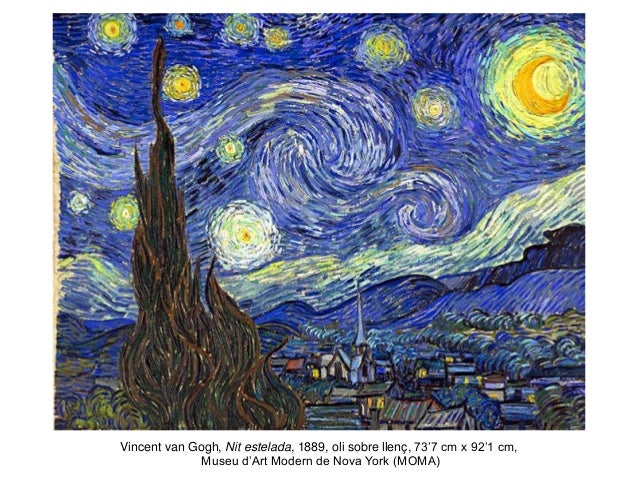
They say it's a dark time... but we can see the stars shining and we know there will be a new tomorrow. Parallelism: night=hard times for UE (Brexit, refugee crisis, economic crisis...); hope= stars (in the painting and in the flag).
Fashion (casting and dressing/make-up);
cómo vestirnos y maquillarnos según la década que representemos (desde 1957) com anar vestits i maquillats segons la dècada (des de 1957). http://data.whicdn.com/images/138106898/original.jpg
Adapt dress, make up, hair style and pose to each decade:
WHEN
Decade
WHO
Cast
HOW
Fashion
WHAT: Values in our Carta Magna
(Treaty of Rome, 1957)
1957-1960
Ana (Ecuador)
Sober
Scarf
Black and white
JUSTICE
1970
Alina (Italy)
Colourful
Hippy
Glasses
EQUALITY
1980
Juanjo (Spain)
Punk
Dyed hair
Leather jacket
SOLIDARITY
1990
Ikram (Morocco)
Naif
Eurodisney
Childish
DIGNITY
2000
Anthony (Nigeria)
Baseball cap
Trendy
sporty
LIBERTY
2010-Now
Anchu (Nepal) and Xi (China)
Ethnic
Multicultural
Welcoming
We are the values of the EU (written)
Final
Kevin (Spain)
European cap
EU flag
Poster “Volem Acolllir”
We are the values of the EU (spoken). + Volem acollir (we want to welcome refugees…
Spaniards had to flee when the Civil War (1936)… now it’s them in Syria and other countries.
We want to help and can help. People might pass along but we must stand out for our values.
EXPLANATION. We have worked on the concept of generation and applied it to the 60 years since the Treaty of Rome in 1957: from the Silent Generation of the 50, the babyboomers, the Generation X, the Y of the Millennials and the Z ). Each one of us maintains a value and represents a decade in the form of dress: the sober ones, the coloring of the 60s and social activism (hippy aesthetics); The 80's (punk); The 90 (Eurodisney); The 2000 and 2010 with multiculturalism and the present: with the refugee crisis and the Brexit we believe that it is worthwhile to go back on foundational values to face the future in a positive way: that's why we turn back, we go to the stars of The EU flag (thanks to Europe Direct office) to the "étoiles" of Van Gogh, a reference of European painting, as the Big Bang of the joint project. We look to the future wanting to use values to practice and therefore the message-in Catalan: Volem acollir = we want to welcome, many are foreigners, others from here, and together we want to make a better world. Like the dancing miracle of the artist's stars dancing in the sky despite the night... We can be these stars in the EU despite the hard times.
CASTELLANO
Hemos trabajado el concepto de generación y lo hemos aplicado a los 60 años transcurridos desde el Tratado de Roma en 1957: de la Silent Generation de los 50, a los babyboomers, la generación X, la Y de los Millennials y la Z (la nuestra). Cada uno nde nosotros mantiene un valor y representa una década en si forma de vestir: los sobrios 50, el colorido de los 60-70 y el activismo social (estética hippy); los 80 (punky); los 90 (Eurodisney); los 2000 y 2010 con la multiculturalidad y la actualidad: con la crisis de los refugiados y el Brexit creemos que vale la pena volver atrás en los valores fundacionales para afrontar el futuro de forma positiva: por eso damos marcha atrás, vamos a las estrellas de la bandera de la UE (gracias oficina Europe Direct) a las "étoiles" de Van Gogh, referente de la pintura europea, como Big Bang del proyecto común. Miramos al futuro queriendo usar los valores a la práctica y por eso el mensaje-en catalán: Volem acollir= queremos acoger;muchos somos extranjeros, otros de aquí, y juntos queremos hacer un mundo mejor
Final edit of the modern style video:
We like this video but it's too long for the requirements of the contest (1:30 min)
NOTE TO THE MEMBERS OF THE JURY: IF IT IS POSSIBLE TO CONSIDER IT FO JUST SOME EXTRA SECONDS, PLEASE DO IT!
SI PER UNS SEGONS EXTRA ENCARA ES POT CONSIDERAR AQUEST VÍDEO, PODEU FER-HO SISPLAU, GRÀCIES!)
Anyway we wanted to share it with you...
and another making of! :)
We have enjoyed a lot and learnt about Europe and our generation, the past generation and what we can do for the future generations within the EU! Keeping the values of the EU!
Consider the image above: what are the main differences when you apply to a big company or to a small company?
Think of a possible job you could take next summer in an English-speaking country, what would it be? What qualifications do you need? And experience? How would you tailor your CV? What would you explain in your cover letter? How would you prepare for an interview? (telephone, skype, face to face)...
I know you are also doing your CV in Spanish and Catalan. If you want to go beyond also in your language, here you have more ideas for a videocurriculum:
STUDENTS OF 3rd ESO:
This is our proposal for the first contest on Internet Safety. We love the Kahoot platform because it is easy and fun and you learn while you share knowledge with your colleagues. We think it is a language we understand, you can work in group, you can research and make the questions and challenge your classmates... and it's online and for free!
Hi! Thank your for your FANTASTIC ideas to change the world! Here you have a mind map of the ideas you shared in class for your campaigns. You can use bubbl.us or other similar webppages to create mind maps and connect ideas in a visual way.
Remember to fill in the document you can find in your Drive, it will help you create and develop your campaign. The steps to follow are:
1. Brainstorming: what environmental problems do we find around us? Which ones worry or conern us the most? Whaat is in our hands to help?
2. Choose one of the problems and look for the causes and consequences. Are there aany campaigns addressing it? Can we get some ideas and/or contribute to the cause? Look at the visuals of their campaign: posters, videos, logos, mottos.. who are they addressing to? How are they trying to convince people?
3. Create your own campaign. Create a poster and dare with a video too! You can create an online campaign or distribute leaflets. Your materials should be adapted to your audience and your idea! E.g. use recycled paper...
4. Oral presentation: prepare a presentation for the class; all members have to present a different idea of the project.
5. Assess your work and your campaign. What is the impact of your campaign? Have you contributed to change the world for the better? What was your role? How do you assess your performance and your classmates' (in your group and the other groups)?
Good luck: together we can change the world! Think globally, act locally... or beyond!
FOR TEACHERS: DOCUMENT SAMPLE
ECO-CAMPAIGN
Group name: Pinkies
Students: Ana, Alicia, Ceci
Title: Be trendy: don't throw them away, give it a-way!
1. Share here the campaigns you have found on the internet (web pages, pictures…):
This year I will be teaching 2nd, 3rd and 4th of ESO.
Ice-breakers for our first day at school! Activities to start using and improving your English in a fun way.
ESO1 and 2:
PASS THE BALL and introduce yourself. IN PAIRS: You can ask several questions to your classmate and then talk about him or her to the class.
In groups, pairs or walking around the class stopping at any random time indicated by the teacher or another student. You can have a list with question words and complete them: Who is your best friend? What is your favourite food? When is your birthday?
MY NAME + MY FIRST LETTER WORD
Introduce yourself just saying your name and another word in English beginning with the same letter as your first name (you can choose a particular topic, i.e. animals), for example: I'm Ann Ant, I'm Bern Ball, I'm Carles Cat... Then, we'll try to remember these nicknames.
GAME: End up with a game: stand up and form a circle, and each student say a word related to a topic (e.g. SUMMER). When a student says a word that does not fit or remains silent, sits down and gets eliminated. The last one standing up is the winner.
An extra activity could be to introduce basic instructions in English and hang a poster with them, e.g.: How do you say ... in English? Excuse me I'm late, can I come in?
ESO3 and 4:
ASK ATTACK: Draw a big question mark and let students ask you questions. Write them down to ellicit error correction (sentence structure)-, other students can help in the right word order/grammatical correction.
LIE DETECTOR: You say three sentences about yourself, two are true, one is false. The class have to guess which one is the lie. The more surprising your true sentences are, the better! If you have proof of it, show them! E.g.:
I have been to Malaysia, Australia and Vanuatu this summer.
I have learnt some Bahasa Indonesia language.
I have been parachuting.
GUESS WHO: in this case, your teacher asks you to write an anecdote about your (e.g. this summer) or a hobby you have, and collects them from you. Then, they are read loud and the class have to guess who is the person who wrote it.
NOTE FOR TEACHERS: It is important to set the assessment criteria in the first day, too. Make it in a clear and concise way, but make all the information available. They can be asked to be the markers of a particular text (written or oral) to experience the way the teacher is going to mark compositions or oral skills.
Exemplify compositions with a good layout and a really bad one to exaggerate the contrasts and make clear what is the model to follow.
ASSESSMENT CRITERIA: 40% Procedures (what you do: compositions, speaking, listening, reading, grammar, vocabulary) 30% Concepts (what you know: written tests, oral tests) 30% Habits (how you do it: homework, dossiers/portfolio, punctuality)
Written compositions: Speaking: Reading: Pr. Presentation 20% Pronunciation 20% 2nd ESO Short stories Acc. Accuracy 20% Accuracy 20% 3rd ESO Short stories Fl. Fluency 20% Fluency 20% 4th ESO Romeo and Juliet Str. Structure 20% Acting 20% + Voluntary reading Or. Originality 20% Content/Ideas 20%
Specify rubrics for each task.
Materials:
Blue and black pens for notes, green pen for self-marking, red pen for other purposes.
Plastic pockets and paper sheets.
Pencil, eraser, sharpener, ruler, scissors, glue for specific purposes.
Headphones (for listenings)
Books: Readers/Original materials (plenty of them in our library). You can fill in the reading worksheet and grade them, plus write a recommendation (why did you liked it? or not...). Make a collective poster/lino.
Textbooks:
Digital Students Book MacMillan INTERFACE
You will work on the digital book and sometimes write theory and some exercises in your notes (at the end you will have a dossier per each unit).
We will use laptops for acccessing materials, eventually tablets and smart phones when the teacher says so.
Flipped classroom: you will study the theory at home and do the exercises in class!
Digital portfolio (ePortfolio): see this example... are you eager? You can upload your writing, learning reflection/diaries and oral skills productions easily!

 Visit our video: http://bit.ly/2DKgHqW



 Here you have some ideas!


