Labels

Showing posts with label WELCOME. Show all posts

15 Sept 2014

ALL: Welcome! 2014-15

Hello! Get ready for an exciting academic year where we will test your erupting creativity and your English skills will improve! Why? Because we are visiting the volcanic area of Olot and the Jordan beech! This is our "Discover Catalonia" project but many ore surprises await for us. Moreover, get ready to travel all around the world in each unit throughout the course to discover amazing cultural facts of the English-speaking world!


ESO1
If this is your first year in our school, WELCOME! This is your English blog for the year where notes, videos, games and extra activities will be uploaded every now and then to motivate you in your English learning whole experience.

ESO3
This year you will be challenged by the Euroscola contest, where team work is essential and you can win a trip abroad. Furthermore, we will have the chance to develop our speaking skills through dramatization in our split group hours so don't be shy and be up for rehearsing!

ESO4
This is your last year in our school (hopefully!) and the external exams are ahead... but we want it to be your best year ever so many projects are ahead and an end-of-year trip abroad, festival and much more. We will help you deciding about your future path and we will have time to develop these matters throughout the year, it is the time to do your best!

So have a look to this video from Kid President to start up! Get INSPIRED!


And for teachers... and students too, this video about experienced teachers on their first day at school... as teachers!


BASICS FOR THE COURSE:


ASSESSMENT
  • 30% Procedures: homework/dossier, compositions, reading
  • 40% Contents: tests (speaking and written: vocabulary, grammar, listening, reading, writing)
  • 30% Attitude: punctuality, participation, politeness

For speaking tests:
25% Accuracy
25% Fluency
25% Pronunciation
25% Acting/Originality

For compositions:          
20% Accuracy (Acc):  grammar, spelling, word order...
20% Fluency (Fl): punctuation, connectors...
20% Structure (Str): title, number of paragraphs, separations...
20% Presentation (Pr): neat and polished, extra requirements: image, map...
20% Originality (Or): you research and use your own ideas beyond the model

IMPORTANT!! Plagiarism (copying) and atomatic translation (e.g. Google translation) will result in an UNQUALIFIED composition (i.e. 0), check www.wordreference.com and other online or print dictionaries.

For reading papers:
Choose the book you like according to your level and complete the reading worksheet. Share your comments with your colleagues in the READING CLUB board and complete the activities in the book to male the best of your reading!

Remember you have graded books to enjoy reading in English at the Languages Department and you can ask for books as many times as you want as this will help you develop your vocabulary and your reading comprehension.


WORKBOOK AND STUDENTS BOOK
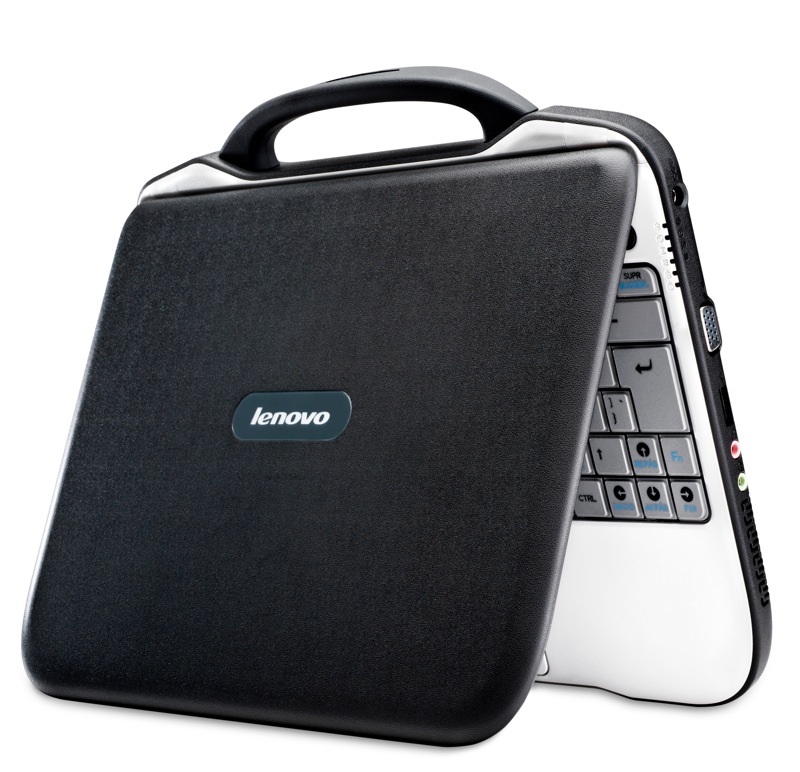
We will use a digital book, Switch (Oxford University Press) Students and Workbook, so you will need a laptop or netbook.

You will also have materials from other sources.
In the absence of your teacher check your email inbox for instructions and this blog. If there are problems with the Internet connection you wil have printed materials delivered by the cover teacher.

MATERIALS

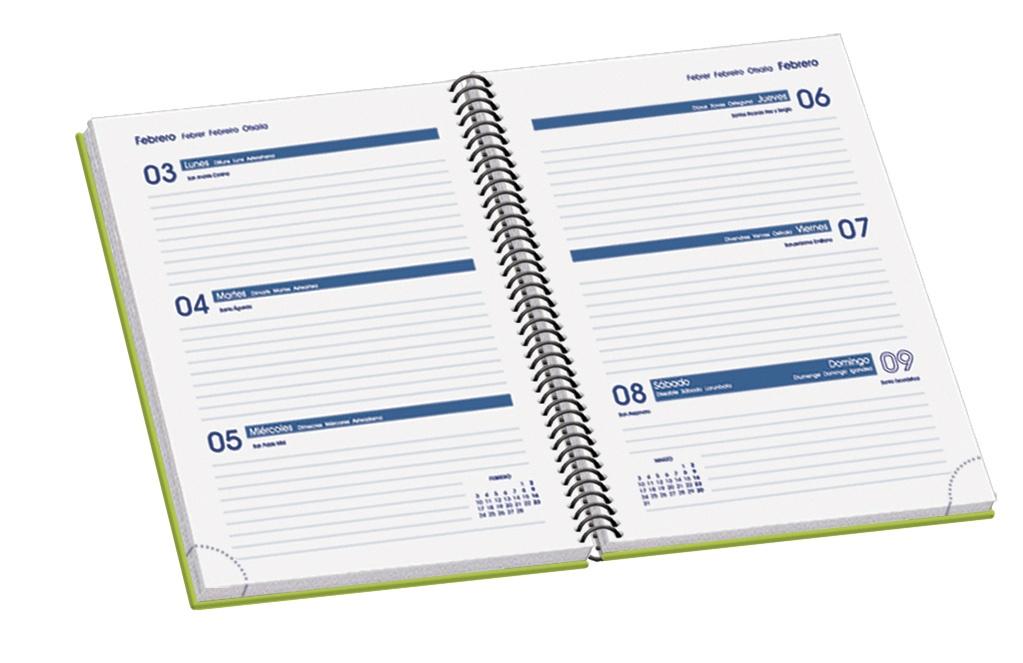
Diary (homework and exams)
White sheets (better recycled!)
Plastic pockets (to keep your dossiers)
Folder
Pens (blue/black for notes, green for self-marking, red for marking)
Coloured pencils, scissors, glue... (for different projects)
Earphones (some listening activities will be on your own)

Match! (Interactive board activity): write the name of the objects:


Proposed heading for CC English (Common Credit English):

CC English                      Tuesday, 16th September 2014
UNIT 1                                     Name Surname Surname
                   
                        TITLE

Notes...
Activity 1:

16 Sept 2013

ALL: Back to school! First day starters for the year. Games and assessment criteria.


Ice-breakers for our first day at school!
Activities to start using and improving your English in a fun way.

ESO1 and 2:
  • PASS THE BALL and introduce yourself. IN PAIRS: You can ask several questions to your classmate and then talk about him or her to the class.
  • MYSELF CARD. Draw yourself and fill in the gaps completing the sentences: My name is... I'm ... years old. I'm from ... I live in...  You can expand your information: My favourite animal/singer/subject is... I can speak... I like/I don't like... 
  • GAME: End up with a game: stand up and form a circle, and each student say a word related to a topic (e.g. SUMMER). When a student says a word that does not fit or remains silent, sits down and gets eliminated. The last one standing up is the winner.
  • An extra activity could be to intorudce basic instructions in English and hang a poster withe them, e.g.: How do you say ... in English?

ESO3 and 4:

  • ASK ATTACK: Draw a big question mark and let students ask you questions. Write them down to ellicit error correction (sentence structure)-, other students can help in the right word order/grammatical correction.
  • LIE DETECTOR: You say three sentences about yourself, two are true, one is false. The class have to guess which one is the lie. The more surprising your true sentences are, the better! If you have proof of it, show them! E.g.:
  1. I have been to Greece, Iceland and India this summer. 
  2. I have learnt Nepalese language.
  3. I have been parachuting.
  • GUESS WHO: in this case, your teacher asks you to write an anecdote about your (e.g. this summer) or a hobby you have, and collects them from you. Then, they are read loud and the class have to guess who is the person who wrote it.
NOTE FOR TEACHERS: It is important to set the assessment criteria in the first day, too. Make it in a clear and concise way, but make all the information available. They can be asked to be the markers of a particular text (written or oral) to experience the way the teacher is going to mark compositions or oral skills.

Exemplify compositions with a good layout and a really bad one to exaggerate the contrasts and make clear what is the model to follow. For the oral skills, we can try with this video about the trending topic speech by Ana Botella at the Olympic Games candidate cities final presentation (this is a parody with the transcription of the way it sounds in 'her' Spanglish speech).  We can invite students to reflect about pronunciation in a fun way. What would they correct about pronunciation?


ASSESSMENT CRITERIA:
40% Procedures (what you do: compositions, speaking, listening, reading, grammar, vocabulary)
30% Concepts (what you know: written tests, oral tests)
30% Habits (how you do it: homework, dossiers/portfolio, punctuality)

Written compositions:           Speaking:                        Reading:
Pr. Presentation 20%                Pronunciation 25%             2nd ESO Short stories
Acc. Accuracy 20%                  Accuracy 25%                   3rd ESO Short stories
Fl. Fluency 20%                        Fluency 25%                     4th ESO Romeo and Juliet
Str. Structure 20%                    Acting 25%                        + Voluntary reading
Or. Originality 20%


23 Nov 2012

ESO4: Welcome Unit. Cyprus!

We start the academic year in one of the most attractive summer destinations in Europe, the island of Cyprus, on the East of the Mediterranean Sea. We'll revise vocabulary and grammar from other years, recycle our knowledge of basic question words and listen to one of the most famous Cypriot singers at the moment: Ivi Adamou, Eurovision contestant for this country in 2012. You'll even interview her! Enjoy it!

15 Dec 2011

ESO1: Me!

Introduce yourself drawing a picture of yourself and then writing about 4 aspects:

  • 1-Personal information (what's your name?, how old are you?, where are you from? where do you live?)
  • 2-Your family (who do you live with? have you got any brothers or sisters? have you got any pet?)
  • 3-Languages! (how many/what languages can you speak? are you learning? can you understand?)
  • 4-Likes and dislikes (what do you like? what do you love? is there anything you don't like? what is your favourite... (food, game, sport)?

EXTRA:
1. In the yellow bubble I tell you my age. How old am I? (as for 2012! :)
    a) 3      b) 13     c) 30     d) 33
2. There is one mistake in the blue bubble... can you spot it? This is written in the past form, but you should use the present tense: I'm 12 years old. I live with my family (...). I've got a pet.
3. In the green bubble I talk about languages... where is Maori spoken? In...
   a) Ireland  b) Australia   c) New Zealand   d) Russia
4. What are my four hobbies? What do I like the most?

22 Oct 2011

Welcome!

Hi! Welcome to Zoom English. You will learn English in a fun way using your skills around the world. Come on! Join us!

We have a whole world to discoover!