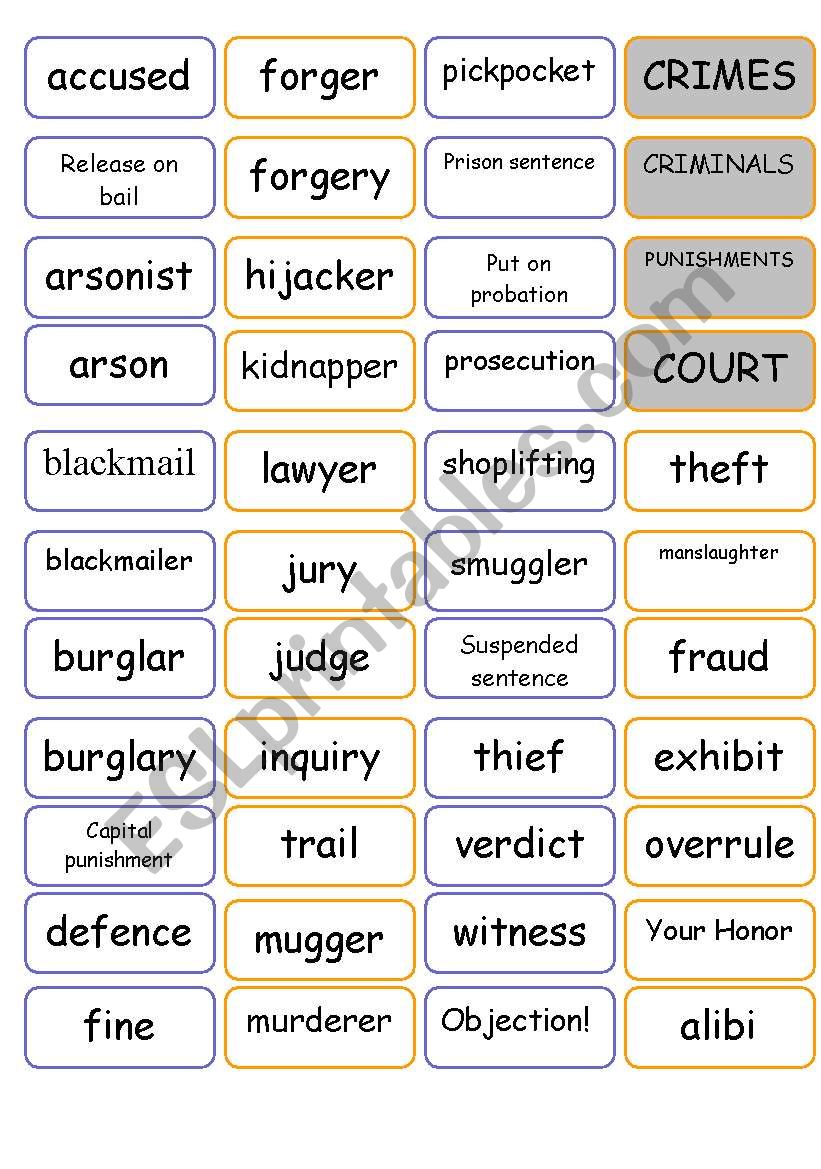
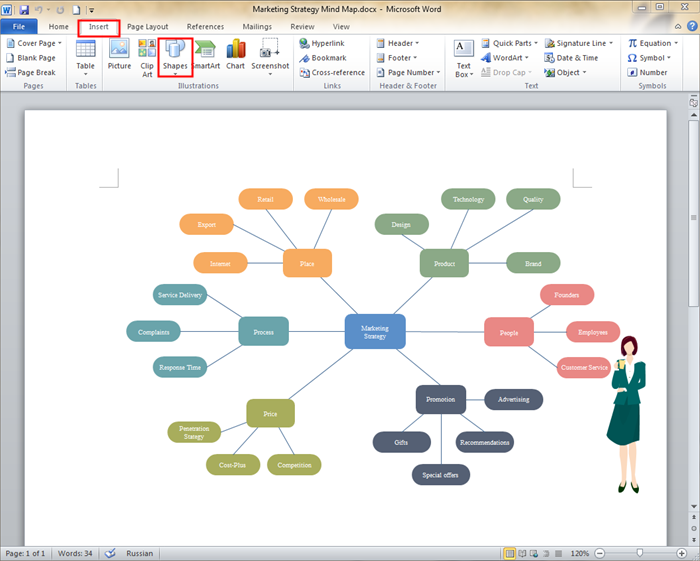
Have a look to this list: can you organize it in a spider web / mind map according to their classification? (Linke them accordingly E.g. Category: burglar, burglary... break into). You can use this page to create yours, copy and paste your image and add it to your personal learning portfolio:
Copy the parts of a piece of news on your notebook. Then choose a piece of news and:
1- Identify its parts
2- Answer the wh- questions and comment on their order (pyramid)
3- Make a summary
4- Finally, write an article about a current issue in you area. You can work in pairs. Add a picture and caption and use the journalist techniques worked in class.
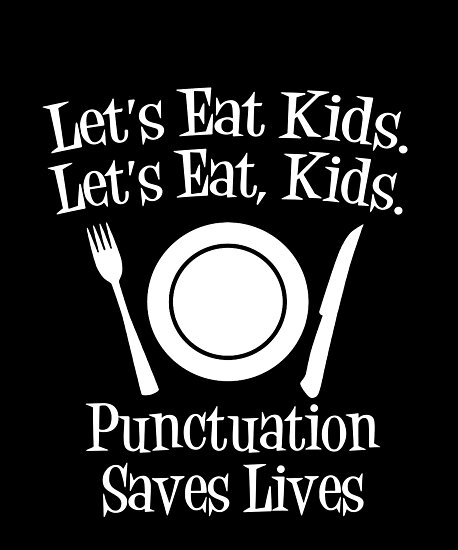
Remember how important it is to use punctuation correctly...
Let's eat children... is not quite the same as Let's eat, children!
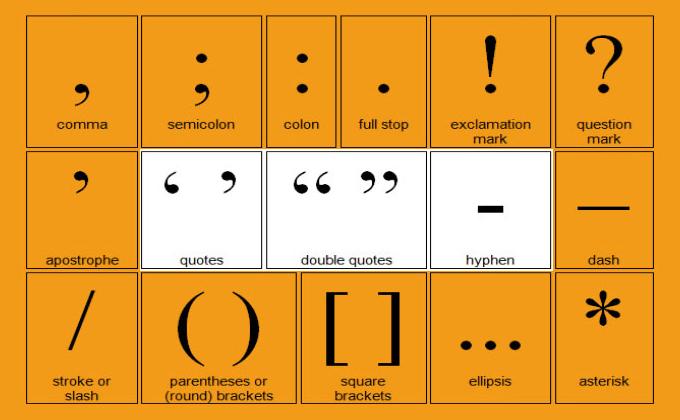
You are about to start university or higher education next year, so it is important to mind your punctuation. Follow these exercises, read the usage and common mistakes and put them into practice in your compositions. Learn the names of each symbol!
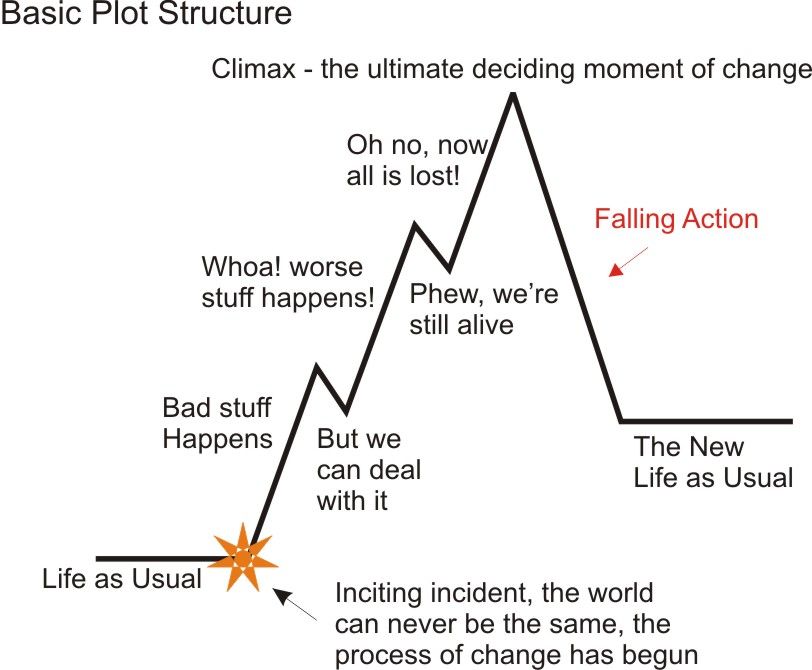
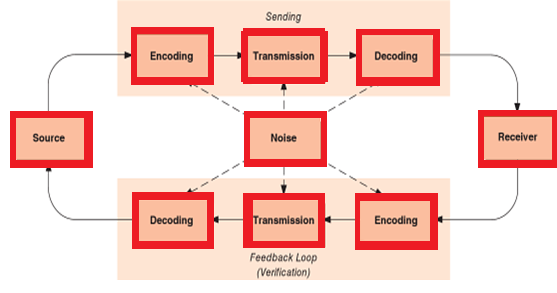
Have a look to these diagrams... what register are they using? And what level of language? What metaphors are they using? Can you apply it to a fairy tale? And to Poe's short stories? Are there more tipes of plot?
(A)
Christopher Columbus (before 31 October 1451 – 20 May 1506) 1.
______ (be) an Italian explorer,
navigator, and colonist who 2.______________
(complete) four
voyages across the Atlantic Ocean under the auspices of
the Catholic Monarchs of
Castile and Aragon. He 3.__________ (lead) the first European expeditions to
the Caribbean, Central
America, and South America,
initiating the permanent European
colonization of the Americas. Columbus 4.______________ (discover) a
viable sailing route to the Americas, a continent that was then unknown to
the Old World. While what he 5._________
(think)he had discovered was a route to
the Far East, he is credited with the opening of the Americas for conquest and
settlement by Europeans.
(B) Columbus's early life is
somewhat obscure, but scholars generally agree that he was born in the Republic of Genoa and 6.______________
(speak) a dialect of Ligurian as
his first language. He 7. ___________ (go) to sea at a young age and 8.___________
(travel) widely, as far north as the British Isles (and possibly Iceland) and
as far south as what is now Ghana. He 9.____________
(marry) a Portuguese noblewoman Filipa Moniz Perestrelo and they10._________ (be)based in Lisbon for several years, but later took
a Castilian mistress; he 11.____________ (have) one son with each woman. Though
largely self-educated, Columbus 12.___________ (read) a lot of geography,
astronomy, and history. He 13.____________ (formulate) a plan to seek a western
sea passage to the East
Indies, hoping to profit from the lucrative spice trade.
(C) After Columbus lobbied them for years, the Catholic Monarchs
of Castile and Aragon agreed to
sponsor a journey west, in the name of the Crown of Castile. Columbus 14.____________
(leave) Castile in August 1492 with three ships, la Pinta, la Niña and la Santa
María, and after a stopover in the Canary
Islands, he 15.__________ (make) landfall in the Americas on 12
October (now celebrated as Columbus
Day). His landing place 16._____ (be) an island in the Bahamas: its native
inhabitants 17._________ (know) it as Guanahani; its exact location is uncertain.
Columbus also 18._______________ (visit) Cuba and Hispaniola, and 19._______________
(establish) a colony in what is now Haiti.
He 20.____________ (arrive) back in Castile in early 1493, and he 21._____________
(bring) a number of vegetables with him: cocoa, potatoes, tomates, etc. Word of his discoveries soon
22._____________ (spread) throughout Europe.
(D) Columbus 23.___________ (make) three further voyages to the
New World, exploring the Lesser Antilles in 1493, Trinidad and
the northern coast of South America in 1498, and the eastern coast of Central
America in 1502. Many of the names he 24.__________ (give) to geographical
features—particularly islands—are still in use. He 25.____________ (continue)
to seek a passage to the East Indies, and the extent to which he was aware that
the Americas 26.____________ (be) a wholly separate landmass is uncertain; he 27.__________
(give) the name indios ("Indians") to the indigenous peoples he 28.______________
(encounter).
(E) Columbus's expeditions 29._____________ (inaugurate) a
period of exploration, conquest, and colonization that 30._____________ (last)
for centuries, and he 31.____________ (help) create the modern Western
world. The transfers between the Old World and New World that
32.______________ (follow) his first voyage are known as the Columbian exchange, and historians 33.___________
(name) the period of human habitation in the Americas prior to his arrival... the Pre-Columbian era.
Adapted from Wikipedia
This week we celebrate Hispanic Day
Celebration. SCANNING TECHNIQUE: Answer
these questions:
a) How many
voyages ______ Columbus complete? _____
b) How many children ____ he have? ____
c) How many ships ____ he take on his first voyage? _____
d) When ____ he first
depart? _____
e) What period ___ he inaugurate? Medieval/modern/contemporary age
EXTRA: DO YOU KNOW...Which city did he depart
from in Spain?
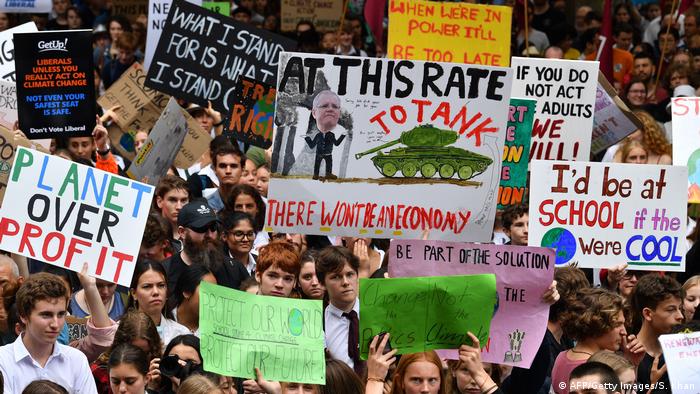
Read the messages and identify the vocabulary, phrasal verbs and puns! Then start thinking your own to create them :)
Every Friday many students demonstrate against global warming and climate change in the world. The fact is that we have been polluting our planet for a long time and currently the Earth has reached one of the highest temperatures in a long time. What can we do to solve this problem? Look at this initiative!This week many schools are celebrating the Climate Week with several activities to be carried out every day. Have a look to the poster and comment on these ideas. Are you upo for the challenge?
Can you identify the four tenses in bold present in the text?
When do we use them?
What expressions can help us identify them?
TEACHERS & STUDENTS FOR CLIMATE!
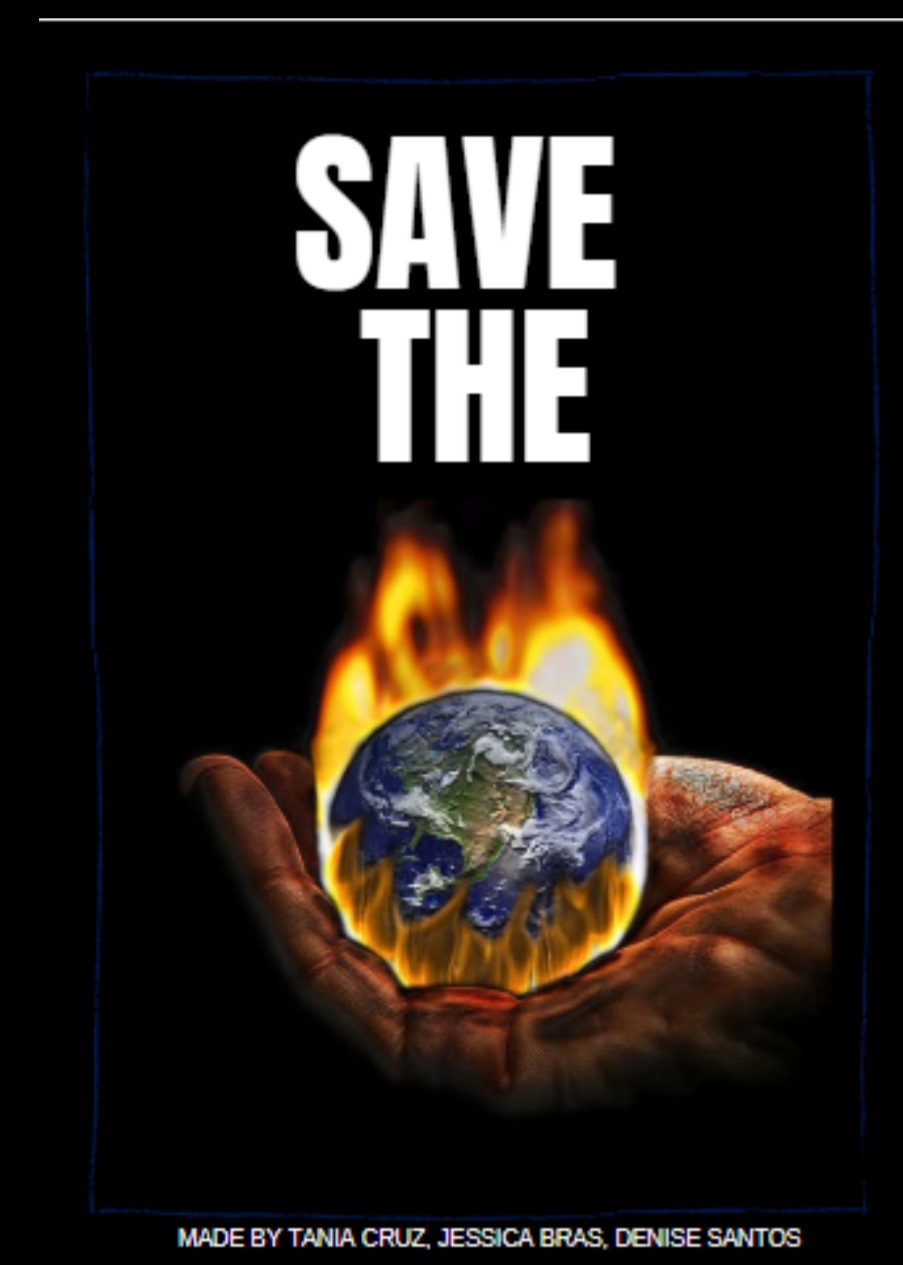
Look at the poster: these are some ideas Spanish schools are going to develop for the week. Can youprovide more ideas? And adapt this poster into Englih in your notebook? We can also display a big one in class or at school!
Try this text about Global Warming using present tenses
Make groups and design your poster. You can take the ideas you worked out last year (deforestation, recycling, saving energy or water...). You can use the apps below. Try to combine powerful images and witty messages (rhyme and puns are a plus!). Then share them and explain them in class. We will hang them out at school this Friday.
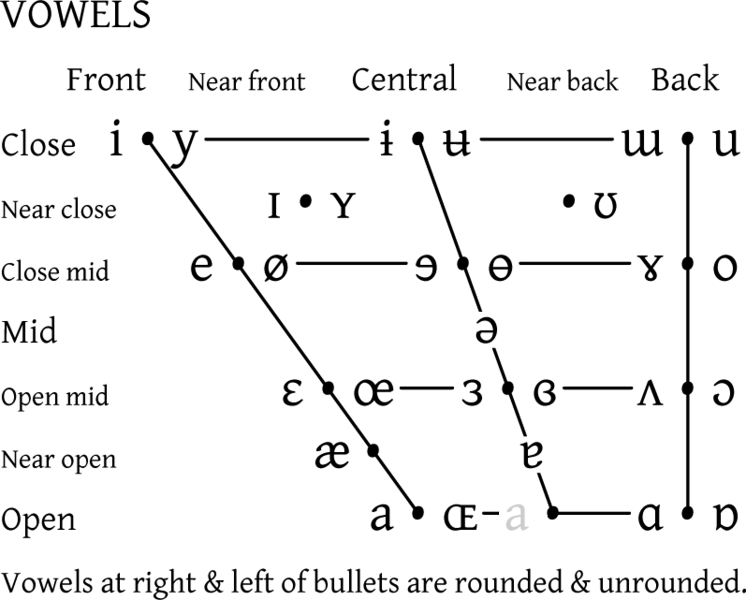
How many vowels are there in the Spanish system? And in Catalan? Today we will discover how many there are in the English vowel system.
DEFINITION: A vowel is a syllabic speech sound pronounced without any stricture in the vocal tract. Vowels are one of the two principal classes of speech sounds, the other being the consonant. Vowels vary in quality, in loudness and also in quantity (length).
This is the general IPA (International phonetic chart) for vowels. Which ones can you recognise? If you are curious to know how do they ALL of them sound, watch this: https://www.youtube.com/watch?v=6UIAe4p2I74
Now, compare, and add the ones in Catalan (and French and Portuguese if you dare!):
We are BACK TO SCHOOL! What were your holidays like? This year I travelled throughout Asia and I had an amazing time with plenty of stories too tell, which I hope I can share with you during the year. Tell the class about your holidays too and expectations for the year!
Just a reminder of the basics for the course as well, so that you don't miss anything!
ASSESMENT FOR ESO
TESTS: oral and written 70%
WORK: class and homework 20%
ATTITUDE: participation 10%
There will be a library available for those who want to read extra books, you can take one book at a tinme and then do a task to choose from to round up your final grade. Ideas: book tube, book review...
Textbooks for each level:
Macmillan INTERFACE
-Students Book
-Workbook
ASSESSMENT for BACHILLERATO
TESTS: oral and written 80%
WORK and ATTITUDE: class and homework + participation 20%
Textbooks for each level:
Macmillan INITIATIVE
-Students Book
-Workbook
The curriculum will be complemented with severeal projects based on collaborative learning, problem based learning, and enhancing compentences like entrepeneurship, learning to learn, cultural knowledge, and the like.
MATERIALS
CLASSROOM VISUAL AND CONTRACT What rules shall govern our class to do the best of it? Work in groups and decide on what norms can be agreed among all of us, teacher and students. We can propose 5 DOs and 5 DON'Ts per group and then discuss and vote for the ones that will go to the viaual/poster that we will later sign.
Discussion: how should we deal with mobile phones in class?
What other visuals would you like to have in the English class? Let's work on them! E.g. question words, verbs, connectors, vocabulary... TASKS
Let's make our poster for rights and rules and our timetable in English.
It's time to get creative! You have 3 options for the end-of-term project and all of them involve filming, preparation and originality. Let's get hands on!
*These will be heavy files to be shared via email so you can use webpages like WeTransfer to share your creations. https://wetransfer.com/
**Remember not to use copyrighted material. You can use free music and FX from repositories like creative commons.
You will have total freedom to make your short film. Length and subject are up to you. Decide on a genre and consider their conventions: you can use black and white for a crime story, romantic music for a love story and funny effects for a comedy. Think of the different types of shots and don't forget to add titles at the begginning and credits at the end, as well as transitions, fade in/out or zooms in nyour production and postproduction. See the steps for the ad below (preproduction, production, postproduction) and be creative!
B) Make a TV ad. Homework: watch TV! Analyse several adverts on TV or the Internet and conside the following aspects: What is their target audience? How do they convey their message? How persuasive are they? What adjectives are they using? What sounds/music/infographics/slogans are there present?
Lenght: 20 to 35 seconds (+ editing). Idea:
You have to introduce a Spanish product into an English-speaking market.
Then, develop your idea!
Preproduction
-your target audience (children, teenagers, old people, ...)
-the hype (create expectation!)
-a slogan (use puns, rhymes, etc.)
-the story told (scriptwriting) and the tone (comic, serious...)
- duration and scenes (a storyboard would be a good idea to plan your shoots).
Production
- Who is acting? (cast) Who is directing? (director) How? (photography).
-Think of issues like the lights, the use of a chroma key (green screen), etc.
- Make up, dressing (notice many actors are dressed in the colours of the brand)
- Props (attrezzo (using the colours of the brand too).
- Where are you filming?
Postproduction
-Add a jingle (use musicand effects free of copyright)
-Add titles, images, logos...
-Render and upload it
Many of you are travelling to Germany and Poland, so I propose you to make a video diary for a travel vlog. Length: 1 to 3 minutes. You can be more than one (balance your interventions).