Watch the video.What are the two meanings of the word "free"?
Now work in pairs. Choose one of the sketches, rehearse and act it out in front of the class!
It's... stormy sunny rainy windy hot warm cold (heavy showers= heavy rain)
What's the weather like in the north of the country on Monday? Heavy showers
What's the weather like in the south on Tuesday?
What's the weather like in the north of the island on Tuesday night?
What's the weather like on Wednesday?
What's the weather like at the weekend?
Today: Mainly ______and ______in England and Wales. ______spreading across Northern Ireland, Scotland and Cumbria during the morning, then southwards to Wales and the north Midlands later. Rain clearing places further north. _______in far _______.
American TV: https://www.youtube.com/watch?v=uLdte1tRPMs
1. Degrees are in... a) ºC (Celsius) b) ºK (Kelvin) c) ºF (Fahrenheit)
2. They start in the.... a) East Coast b) Centre of the USA b) West Coast
3. They end up with the weather in the... a) East Coast b) Centre of the USA b) West Coast
4. What day is it?
5. What part of the day?
Form the past participle of these verbs and check its meaning:
REGULAR (-ed): climb- scale- crawl- kiss-
IRREGULAR (3rd column): run- find- speak- hold-
Reflect:
1-Where is the particle "still" placed?
2-Is the sentence affirmative, negative or interrogative?
3-What two words do we use in the Present Perfect?
Auxiliary: _____ (present tense) + verb (p____ p______ )
4-When do we usually use the present perfect?
5-In your opinion, what's the meaning of the song?
Look for affirmative and negative forms of the present perfect in the song. Then make the questions that they would answer. For example: Have you climbed the highest mountains? Try adding ever, yet and already. Have you ever climbed the highest mountains? Have you climbed the highest mountains yet? Have you already climbed the highest mountains?
Quizz: Where are U2 from? What are the two main religions in their country? What were the Troubles?
VOCABULARY REVISION
How many body parts can you find in the lyrics?
I have climbed the highest mountains I have run through the fields Only to be with you Only to be with you.
I have run, I have crawled I have scaled these city walls These city walls Only to be with you.
But I still haven't found What I'm looking for. But I still haven't found What I'm looking for.
I have kissed honey lips Felt the healing in her finger tips It burned like fire (I was) burning inside her.
I have spoke with the tongue of angels I have held the hand of a devil It was warm in the night I was cold as a stone.
But I still haven't found What I'm looking for. But I still haven't found What I'm looking for.
I believe in the Kingdom Come Then all the colours will bleed into one Bleed into one. But yes, I'm still running.
You broke the bonds And you loosed the chains Carried the cross of my shame Oh my shame, you know I believe it.
But I still haven't found What I'm looking for. But I still haven't found What I'm looking for.
CONVERSATION GUIDE: Doctor-Good morning. What's the matter? Patient-I've got (a) ... (symptoms)
D-When did it start?
P- ... days ago.
D-Have you already taken any medication?
P- Yes, I've taken (an aspirin...) / No, I haven't.
D-Let's see... It seems you have (a) ... (illness).
P-What can I take?
D-I'll prescribe you some medicine. What do you prefer: (syrup or pills? / tablets or capsules?...)
P-How often should I take them?
D-Once/twice/three timesa day/a week, before/during/after the meals.
P-Thank you doctor.
D-Get well soon. Good bye.
Have a look to this instructions and follow the instructions of the listening exercise. Then, work in pairs and make your own dialogues! http://learnenglishteens.britishcouncil.org/skills/listening-skills-practice/giving-directions
A-Hello, can you help me?
B-Sure! How can I help you?
A-Where is the...?
B. Go straight ahead. Go past the traffic lights. Then, take the (first/second/third) street on the (left/right).
It's (opposite / next to) the ...
A- Thanks
B-You are welcome
VOC- First, let's revise the daily routines! https://4blifeinpoland.files.wordpress.com/2013/03/daily-routines.jpgWatch the video below. What are Mr Bean's daily routines? https://www.youtube.com/watch?v=YwmIDHm3kOk
Then make questions about the video and make your colleagues to answer them: E.g. Where does Mr Bean have breakfast? In the park.
Work in pairs/groups of three: choose a card at random and make the
action so that your classmate guesses whats the routine you are
mimicring! Ask questions: E.g. What are you doing? I'm brushing my teeth.
Most countries have laws (official rules set by the government). Together, these laws are called "the Law". When people disobey the Law, we say that they "break the law", and we call such people "law breakers" or "criminals". Breaking the law is a "crime".
This criminal (noun)
does this...
The crime (noun)
The action (verb)
accomplice
helps another person to commit a crime
aiding and abetting
to aid and abet
arsonist
sets fire to other people's property illegally
arson
to commit arson
assassin
kills people for political reasons, or in return for payment
assassination
to assassinate
bigamist
marries more than one person at the same time
bigamy
to commit bigamy
burglar
breaks in to buildings to steal
burglary
to burgle
deserter
is a member of the armed forces who leaves without permission
desertion
to desert
drug dealer
buys and sells illegal drugs
drug dealing
to deal in drugs
forger
makes fake money or documents
forgery
to forge
gangster
is a member of a violent criminal gang (group)
gangsterism
-
hijacker
takes control of a vehicle (plane, ship etc) by force and diverts it
hijacking
to hijack
hooligan
is a violent young troublemaker
hooliganism
-
kidnapper
takes people away by force and demands money to free them
kidnapping
to kidnap
mugger
attacks and robs people in a public place
mugging
to mug
murderer
deliberately kills another person
murder
to murder
offender
is anybody who breaks the law
committing an offence
to offend
pickpocket
steals money etc from other people's pockets
pickpocketing
to pickpocket
robber
steals money etc, using force or the threat of force
robbery
to rob
shoplifter
steals goods from a shop while pretending to be a customer
shoplifting
to shoplift
smuggler
moves goods illegally into or out of a country without paying tax
smuggling
to smuggle
spy
secretly gets information about another country
spying
to spy
industrial spy
secretly gets information about a company
industrial spying
to spy
stowaway
hides on a plane or ship to travel secretly and free
stowing away
to stow away
terrorist
uses violence for political reasons
terrorism
to commit terrorism
thief
steals property from other people (without using violence)
theft
to thieve
traitor
betrays his country to another country
treachery
to betray
vandal
deliberately destroys or damages public property
vandalism
to vandalize
Crime and punishment: https://www.englishclub.com/english-for-work/police-crime.htm
Questions from law breakers or suspected criminals
Why did you pull me over?
Have I done something wrong?
Is this illegal?
What are my rights?
Can I call a lawyer?
Where are you taking me?
Can I make a phone call?
Questions police may ask a suspected criminal
Are you carrying any illegal drugs?
Do you have a weapon?
Does this belong to you?
Whose car is this?
Where were you at eight last night?
Informing someone of laws and police procedures
You are under arrest.
Put your hands on your head.
I am taking you to the police station.
Please get in the police car.
You will have to pay a fine for this.
I will give you a warning this time.
I'm going to write you a ticket.
We'll tow your car to the station.
Smoking in restaurants is illegal in this country.
It is against the law to do drugs in public.
Types of crime
Crime
Definition
abduction/kidnapping
taking a person to a secret location using force
armed robbery
using a weapon to steal
arson
setting fire to a place on purpose
assault
hurting another person physically
attempted murder
trying to kill someone (but failing)
burglary, breaking and entering
going into another person's home or business with force
child abuse
injuring a child on purpose
domestic violence
physical assault that occur within the home
drug trafficking
trading illegal drugs
drunk driving
driving after having too much alcohol
fraud
lying or cheating for business or monetary purposes
hijacking
holding people in transit hostage (usually on a plane)
murder/homicide
taking someone's life through violence
shoplifting
stealing merchandise from a store
smuggling
bringing products into a country secretly and illegally
speeding
driving beyond the speed limit
terrorism
acts of crime against a group (political/religious) or another country
theft
stealing
torture
extremely cruel and unfair treatment (often towards prisoners)
vandalism
damaging public or private property (for example with spray paint)
white collar crime
breaking the law in business
Types of punishment
Punishment
(example offence)
Definition
traffic ticket
(speeding, parking)
leaves marks on driving record/involves paying a fine
license suspension
(drunk driving)
driving rights are removed for a certain period of time
fine
(hunting out of season)
pay money as punishment for minor/petty crime
house arrest
(a young offender who is waiting to go to court)
remain in one's home for a certain period of time
community service
(a youth that steals a car for the first time)
do volunteer work such as teaching children about crime or cleaning up garbage
jail time
(man who assaults his wife)
spend a certain amount of months or years locked away from society
life in prison
(a woman who commits homicide)
spend the rest of one's life in prison with no chance of going back into society
Can you imagine what is life like in a boarding school? It is a school where you don't only studyu, but also pend your free time, have all your meals ans even sleep there! Would you like to study in a boarding school?
Have a look to the daily routine of these students and answer the questions. What kind or school do you think it will be? (what kind of means what type of...):
a. sports school b. languages school c. drama school
1. Put in order the activities they do in the morning: get dressed / brush their teeth / have breakfast / comb their hair / wake up
2. They go to school at...
seven o'clock / ten past seven / quarter past seven / half past seven
3. They go to school... by car / by bus / on foot / by bicycle
4. What sports do they practise?
5. Where do they eat? And where do they have dinner?
6. When do they have breakfast? And lunch? And dinner?
7. What do they do in their free time?
8. At what time do they come back from school in the afternoon? 1:45 am / 1:45 pm / 2 pm / 2:30 pm
9. Who can study in La Masia? How do they feel in there?
10.What do you prefer, a normal school or a boarding school? Why?
SP/WR: Has your vision of boarding schools changed after watching the video? Why?
Examples for your answers:
-Yes, because I think that living in a boarding school is fun / interesting / great: you can live with your friends!
-No, because I think that living in a boarding school is boring / stressing / sad: you can't see your parents often!
READING AND GRAMMAR 1) Read the introduction to the play and turn ALL verb tenses into the past (x10). Example: Mollie and Giles Ralston were opening their guesthouse, Monkswell Manor, for its first guests.
Mollie and Giles Ralston are opening their
guesthouse, Monkswell Manor, for its first guests. They are new to the business
and struggle with the details and an unusually heavy snowstorm. They hear on
the radio that a Mrs. Maureen Lyon has been murdered in London and the suspect
is wearing a dark overcoat, light scarf, and soft felt hat. Giles is wearing
similar outerwear, as are many of the guests. After all the guests have settled
in, Mollie receives a phone call from the Police station. She is informed that
Sergeant Trotter will be coming to the Manor and everyone must fully cooperate
with him.
SPEAKING & WRITING
2a) What was the suspect wearing? 2b) How many suspects were there?
2c) Let's describe the character in groups. Choose one character per group and answer the questions using the past simple and the past continuous:
a) What did they look like?
b) What were they wearing? Discuss who matches the description given on the radio notice orally.
3) Complete the questions with the given words and then answer them: who, what, when, where, why, how
E.g. Who was the author? The author was Agatha Christie.
______ was the play written? The play was written in...
______ did it happen?
______ did the action take place?
______ did you think the murder was at the beginning? ______ did he or she do it? ______ did he/she do it?
LISTENING The title comes from a nursery rhyme called "Three Blind Mice" that you can listen to on the video below. 4a) What picture above corresponds to the nursery rhyme referred to in our play? 4b) Once you have seen the play... What do you think: Does the title match the play? Why?
WRITING-COMPOSITION Finally, write a report on your experience. When did you go? Who did you go with? Did you like the play? Mention characterization, music, props, dressing, hairdressing and make-up, acting. What's the secret of its success? Keep the secret!!
DID YOU KNOW? The Mousetrap is a murder mysteryplay by Agatha Christie. The Mousetrap opened in the West End of London in 1952, and has been running continuously since then. It has by far the longest initial run of any play in history, with its 25,000th performance taking place on 18 November 2012. It is the longest running show (of any type) of the modern era. The play is also known for its twist ending, which the audience are traditionally asked not to reveal after leaving the theatre. More info in http://en.wikipedia.org/wiki/The_Mousetrap
True or False
1) The ghost's name is Caspian.
2) The boys receive candy after saying "trick or treat".
3) The boys didn't know Casper was a real ghost.
4) The girl's name is Mary.
5) There are two violinists and two guitarists at the party.
Extra: The girl isn't scared of the ghost. Why? Because...
Choose the correct answer
1.What kind of fim is the girl watching?
a) Comedy b) Horror c) Action
2. What's not her hobby?
a) Puzzle games b) Photography c) Chess
3. What is she preparing in the microwave?
a) Pop corn b) Chips c) Nachos
4. What Halloween elements can't you see in the decoration?
a) Jack-o'-lantern b) Bats and witches c) Skull
5. What did she found in the last piece of the puzzle?
a) Nothing b) A mask c) A monster
Extra: Whats do these times refer to? 2:20 2:07
Were you scared? Why? Was the end expected or unexpected?
ESO3: Can you talk about her hobbies? Use the expressions you have learnt (she's into... she's a fan of... she's interested in...)
ESO4: What does she look like? Use the vocabulary you've learnt (She's wearing...)


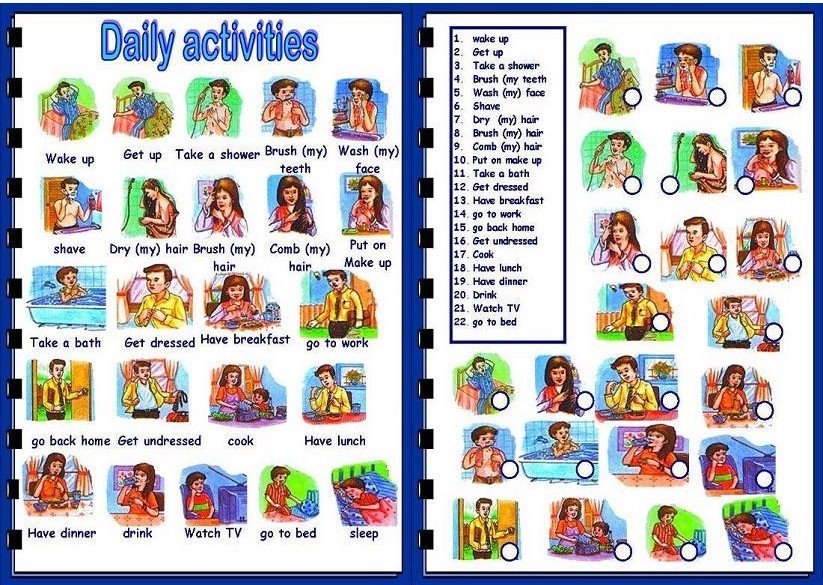 Watch the video below. What are Mr Bean's daily routines?