Labels

Showing posts with label PRESENT. Show all posts

30 Sept 2021

3ESO + 4ESO: Unit 0 Comparative and superlative

 Let's practise the comparative and superlative in English with this presentation and the following activities (include your final result in your Portfolio/Powerpoint!). You will also learn about some interesting facts about Australia and New Zealand!


Activities (CHOOSE YOUR LEVEL!), COMPARATIVES AND SUPERLATIVES

COMPARATIVES

1) EASY: https://www.liveworksheets.com/yv9708pe

2) AVERAGE: https://www.liveworksheets.com/rv386734np

3) EXTRA: https://www.liveworksheets.com/pu1087sv

4) REVISION: https://www.liveworksheets.com/mz5722sj


SUPERLATIVES

1) EASY: READING-THE SOLAR SYSTEM https://www.liveworksheets.com/co1737573me

2) AVERAGE: https://www.liveworksheets.com/ra853164qi

3) EXTRA: GAME-CROSSWORD & SECRET WORD: https://www.liveworksheets.com/br609091lm

4) REVISION: https://www.liveworksheets.com/jx5853ob


LISTENING/ 3 SONGS:

A) AVERAGE:  https://www.liveworksheets.com/lh268338dz


COMPARATIVESA ND SUPERLATIVES: DISTINCTION

1) Structural: https://www.liveworksheets.com/ho949079ug

2) Batman reading: https://www.liveworksheets.com/rp646711za


PREPARE FOR THE EXAM: PRESENT SIMPLE & CONTINUOUS

1) EASY VIDEO/LISTENING: https://www.liveworksheets.com/oj27338qg

2) EASY: https://www.liveworksheets.com/bv1700jq

3) AVERAGE: https://www.liveworksheets.com/kd1117924ls

4) EXTRA-READING: CHINESE FOOD: https://www.liveworksheets.com/cz1286877ph


EXTRA! LISTENING / SONGS: LEMON TREE

B) HARD: https://www.liveworksheets.com/ti991761gc


SPEAKING/DEBATE: COMPARE LIVING IN THE COUNTRY AND THE CITY

WRITING: WRITE YOUR CONLCUSIONS!

20 Sept 2021

2BAC. NATURE ALSO KNOWS ABOUT PACKAGING + Present and Past Tenses

 Let's watch this report. Make 6 questions to your classmates (6 Ws). E.g. Where does it take place?


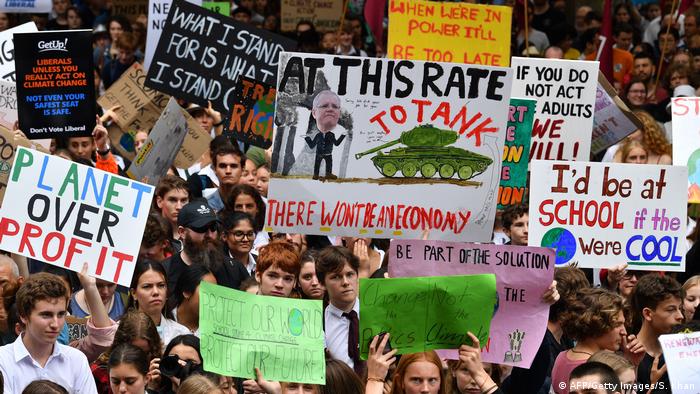
Now have a look to these pictures.

Image result for climate protests
STAND FOR: refuse to endure or tolerate.
STAND ON: be scrupulous in the observance of.

Read the messages and identify the vocabulary, phrasal verbs and puns! Then start thinking your own to create them :)

Image result for climate protestsImage result for climate protestsImage result for climate protestsImage result for climate protests

Every Friday many students demonstrate against global warming and climate change in the world. The fact is that we have been polluting our planet for a long time and currently the Earth has reached one of the highest temperatures in a long time. What can we do to solve this problem? Look at this initiative!This week many schools are celebrating the Climate Week with several activities to be carried out every day. Have a look to the poster and comment on these ideas. Are you upo for the challenge?


  • Can you identify the four tenses in bold present in the text? 
  • When do we use them? 
  • What expressions can help us identify them?


TEACHERS & STUDENTS FOR CLIMATE!
Look at the poster: these are some ideas Spanish schools are going to develop for the week. Can youprovide more ideas? And adapt this poster into Englih in your notebook? We can also display a big one in class or at school!


Try this text about Global Warming using present tenses

https://www.english-grammar.at/online_exercises/tenses/t054-global-warming.htm


Drilling exercises:

Present simple or continuous?

https://www.english-grammar.at/online_exercises/tenses/present_simple_progressive1.htm
https://www.english-grammar.at/online_exercises/tenses/t127-present-tense.htm

Present perfect
https://www.englisch-hilfen.de/en/exercises/tenses/present_perfect_or_progressive.htm
https://www.englisch-hilfen.de/en/exercises/tenses/present_perfect_statements.htm
https://www.englisch-hilfen.de/en/exercises/tenses/present_perfect_negation.htm
https://www.englisch-hilfen.de/en/exercises/questions/present_perfect2.htm
https://www.englisch-hilfen.de/en/exercises/tenses/present_perfect_mix.htm

Create your posters!

Make groups and design your poster. You can take the ideas you worked out last year (deforestation, recycling, saving energy or water...). You can use the apps below. Try to combine powerful images and witty messages (rhyme and puns are a plus!). Then share them and explain them in class. We will hang them out at school this Friday.

https://piktochart.com/formats/posters/
https://www.canva.com/create/posters/

Which SDG are we working on?
*SDG: Sustainalble Development Goals /ODS: Objetivos de Desarrollo Sostenible


YOUR POSTERS: CONGRATULATIONS! GOOD JOB!!


2021-2022: Have a look to this initiative for ideas. 


Choose a fruit and create a campaign  in English with the same purpose.
include it in your powerpoint and make a presentation (you can use Present Simple adn Continuous). If you are an early-finsher, try with a vegetable too!


8 Oct 2020

1BAC. UNIT 1. Present simple, continuous and perfect (simple and continuous). Vocabulary: Free time!


Notice these structures:

Double comparative: the more/-er... the more/-er... 
The more relaxed we feel, the happier we are 
(cuanto más relajados estamos, más felices somos)

Much + comparative
I'm much happier now (soy mucho más feliz ahora).


Provide 5 sentences of each structrure in your presentation (Drive). Include pictures.


Revise for the exam!  GRAMMAR

  1. Comparative: https://www.liveworksheets.com/zy1326sp
  2. Present simple and continuous: https://www.liveworksheets.com/ag628375hm
  3. Present perfect (simple and cont.) https://www.perfect-english-grammar.com/present-perfect-present-perfect-continuous-1.html
  4. State verbs: https://www.liveworksheets.com/nh1037175ms
  5. READING: About hobbies: https://www.liveworksheets.com/ig92202qf
  6. LISTENING: https://en.islcollective.com/video-lessons/students-hobbies-and-interests

Revision of irreglar verbs: 

https://www.bbc.co.uk/learningenglish/english/course/intermediate/unit-12/session-1 

 Sessions for HOBBIES: 

https://learnenglishteens.britishcouncil.org/topics/hobbies-leisure/term


23 Sept 2019

BACH. Climate Week + Present tenses (Present S. & Cont. + Present Prefect S. & Cont.). We have been polliting for a long time...

Let's watch this report. Make 6 questions to your classmates (6 Ws). E.g. Where does it take place?


Now have a look to these pictures.

Image result for climate protests
STAND FOR: refuse to endure or tolerate.
STAND ON: be scrupulous in the observance of.

Read the messages and identify the vocabulary, phrasal verbs and puns! Then start thinking your own to create them :)

Image result for climate protestsImage result for climate protestsImage result for climate protestsImage result for climate protests

Every Friday many students demonstrate against global warming and climate change in the world. The fact is that we have been polluting our planet for a long time and currently the Earth has reached one of the highest temperatures in a long time. What can we do to solve this problem? Look at this initiative!This week many schools are celebrating the Climate Week with several activities to be carried out every day. Have a look to the poster and comment on these ideas. Are you upo for the challenge?


  • Can you identify the four tenses in bold present in the text? 
  • When do we use them? 
  • What expressions can help us identify them?


TEACHERS & STUDENTS FOR CLIMATE!
Look at the poster: these are some ideas Spanish schools are going to develop for the week. Can youprovide more ideas? And adapt this poster into Englih in your notebook? We can also display a big one in class or at school!


Try this text about Global Warming using present tenses

https://www.english-grammar.at/online_exercises/tenses/t054-global-warming.htm


Drilling exercises:

Present simple or continuous?

https://www.english-grammar.at/online_exercises/tenses/present_simple_progressive1.htm
https://www.english-grammar.at/online_exercises/tenses/t127-present-tense.htm

Present perfect
https://www.englisch-hilfen.de/en/exercises/tenses/present_perfect_or_progressive.htm
https://www.englisch-hilfen.de/en/exercises/tenses/present_perfect_statements.htm
https://www.englisch-hilfen.de/en/exercises/tenses/present_perfect_negation.htm
https://www.englisch-hilfen.de/en/exercises/questions/present_perfect2.htm
https://www.englisch-hilfen.de/en/exercises/tenses/present_perfect_mix.htm

Create your posters!

Make groups and design your poster. You can take the ideas you worked out last year (deforestation, recycling, saving energy or water...). You can use the apps below. Try to combine powerful images and witty messages (rhyme and puns are a plus!). Then share them and explain them in class. We will hang them out at school this Friday.

https://piktochart.com/formats/posters/
https://www.canva.com/create/posters/

Which SDG are we working on?
*SDG: Sustainalble Development Goals /ODS: Objetivos de Desarrollo Sostenible


YOUR POSTERS: CONGRATULATIONS! GOOD JOB!!


19 Nov 2012

ESO3: Learning to learn (L2L)-Mind maps.

I would like to introduce you to a strategy to learn grammar or vocabulary (or actually whatever you want) in a creative way: mind maps! It's a way to organize what you have to learn creating threads or branches from a particular idea. You can have a chore illustration and from there add smaller branches. The more creative you are the better!

Ana Todorovic, from Serbia, proposes this mind map for the Present Smple: a big Superman to help us when the alarm sounds (third person singular: he/she/it adds -S, like the "S" for Superman). Can you identify other clues she uses?

Mind Map of Present Simple Tense

http://www.tt-group.net/text/mape_uma/mape_uma_2.htm

Your turn:
Study her example and try to make a mind map on your own for the Present Continuous (you can use the information below).

19 Oct 2012

ESO4: Present Tense contrast


The difference between the present simple and the present continuous might seem like climbing the Annapurna but it's not! Here you have some exercises to practise... one of them is a letter of a British expedition to this high mountain in Nepal.

EASY PEASY:
http://www.english-grammar-lessons.com/presentsimpleorcontinuous/exercise1.swf
http://www.english-grammar-lessons.com/presentsimpleorcontinuous/exercise3.html
http://www.english-grammar-lessons.com/presentsimpleorcontinuous/exercise4.html
http://www.english-grammar-lessons.com/presentsimpleorcontinuous/exercise5.html
http://www.english-grammar-lessons.com/presentsimpleorcontinuous/exercise6.html

I WANT MORE!:
http://www.englisch-hilfen.de/en/exercises/tenses/simple_present_progressive2.htm
http://www.leshoekje.be/leshoekje/ICT-oef%20ENG2/present-continuous-sentences.htm
http://www.englishpage.com/verbpage/verbs1.htm
http://www.englishpage.com/verbpage/verbs2.htm

ESO3: Present Continuous

Present continuous (or progessive)  is used for:

a)  Actions that are happening at this moment:
I am reading this sentence right now.
b) Actions that are happening during the present  period of time
I am studying 4th of ESO this year.
c) Arranged actions in the future:
I'm visiting my grandmother this evening.

EXTRA: It can also be used for habitual actions in a negative sense:

d) My little brother is always crying.... I can't stand it!

The affirmative structure uses the subject + verb TO BE as auxiliary + the main verb ending in -ING

I am writing
You are working
He/She/It is playing
We are learning
They are reading

We always negate the auxiliary:

I'm not reading
you aren't listening
he/she/it isn't working
we aren't playing
they aren't writing

The question structure is as follows (like wagons in a train):
(WH-) + Aux. BE + Subject + V-ing...?

Am I teaching?
Are you studying?
Is he/she/it swimming?
Are we playing?
Are they getting ready?

Remember the spelling rules for the -ing form!

Typical time expressions used with this tense are NOW, AT THE MOMENT, AT PRESENT...

Exercises:
http://www.english-grammar-lessons.com/presentcontinuous/exercise1.swf
http://www.english-grammar-lessons.com/presentcontinuous/exercise2.swf
http://www.english-grammar-lessons.com/presentcontinuous/exercise3.swf
http://www.english-grammar-lessons.com/presentcontinuous/exercise4.swf
http://www.english-grammar-lessons.com/presentcontinuous/exercise5.swf
http://www.english-grammar-lessons.com/presentcontinuous/exercise6.swf

I WANT MORE:
http://www.englisch-hilfen.de/en/exercises/tenses/present_progressive_statements_long.htm
http://www.englisch-hilfen.de/en/exercises/tenses/present_progressive_statements_contracted.htm

ESO3: Present Simple exercises

Here you have some exercises for practising the Present Simple structures. Revise the chart:

AffirmativeNegativeInterrogative
I go
I don't go
Do I go ?
You go
You don't go
Do you go ?
He goes
He doesn't go
Does he go ?
She goes
She doesn't go
Does she go ?
It goes
It doesn't go
Does it go ?
We go
We don't go
Do we go ?
You go
You don't go
Do you go ?
They go
They don't go
Do they go ?


We usually find it with epressions such as: often - generally - usually - always - never
every day - every week - every month - every year - sometimes
Remember we use it for habitual actions, universal truths, and 'permanent' situations, for example:

a) I usually go to school by bus. (Habitual action)
b) Water boils at 100ºC. (Universal truth)
c) I live in London.

Structure: subject + verb (base form)

I play football.
You play tennis.
We study here.
They work there.

LOOK! The alarm sounds in the 3rd person singular:

Affirmative: He PLAYS football.
Negative: He DOESN'T play football.
Question: DOES he play football?

Notice that we in the negative, questions, or after modal verbs (can, must...) we don't use the -s at the end:

He doesn't plays.
He doesn't play.

She can plays tennis.
She can play tennis.

Exercises:
http://www.ego4u.com/en/cram-up/grammar/simple-present/form/exercises
http://www.usingenglish.com/quizzes/65.html
http://www.englishmaven.org/HP6/Present%20Tense%20Exercise%208.htm

31 Jan 2012

ESO4: Present Perfect exercises

Here you have a good link for keeping practising the Present Perfect: http://www.ego4u.com/en/cram-up/grammar/present-perfect-simple. (Positive, Negative and Questions).

You can practise this tense in the following text about the Loch Ness: http://www.ego4u.com/en/read-on/countries/uk/tour/loch-ness

If you want more, here you have a text about snowboarding!

A Look at the Intriguing History of Snowboarding

By Keith Kingston
To say who actually invented the sport of snowboarding would be impossible because people have always loved to slide down a snow-covered hill. Soaring through the snow on some kind of seat or board is nothing new. The ways to enjoy the snow are numerous, and people have devised ways to turn garbage can lids and cardboard into ‘snow boards’ to enjoy an afternoon frolic outdoors. The various ways to glide through snow have become more sophisticated and have evolved into using polished boards or skis in much the same manner as a surfboarder would ride a wave.
There have been many attempts at developing a modern snowboard. In 1965, the ‘Snurfer’ (a word play on ‘snow’ and ‘surfer’) was developed as a child’s toy. Two skis were bound together and a rope was placed at the front end to afford control and stability. Over 500,000 ‘Snurfers’ were sold in 1966 but they were never seen as more than a child's plaything even though organized competitions began to take place. The year 1969 brought a slightly more sophisticated snowboard based on the principles of skiing combined with surfboard styling.
The ‘Flying Yellow Banana’ was developed in 1977. This was nothing more than a plastic shell covered with a top surface like that of a skateboard, but at the time it was considered a major advance in the little known sport of snowboarding. The first national snowboard race was held in the area outside Woodstock and was known as ‘The Suicide Six.’ The race consisted of a steep downhill run called The Face in which the main goal was probably mere survival.
Snowboarding continued to increase in popularity over the next several years. In 1985 the first magazine dedicated specifically to snowboarding hit the news stands with huge success and furthered the popularity of this exciting sport. Hoards of fans began to organize regional events and pretty soon snowboarding events were held in all parts of the world. In the year 1994 snowboarding was finally declared an Olympic event, much to the delight of fans. The not-so-new sport of snowboarding was finally recognized and meant a huge victory for serious snowboarders across the globe.
A collection of snowboarding tricks and stunts was released on video in 1996. Filmed in Alaska, the breathtaking beauty and captivating snowboarding techniques featured in the video exposed snowboarding to a new generation, and by 1998 snowboarding constituted almost 50% of all winter activity. Today, nearly all ski resorts accept snowboarders. There are still a few holding on to the past but this is unlikely to continue as the number of snowboarders continually increases.
From the first crudely built snowboards to the advanced and specialized models available today, snowboarders have carried a ‘bad boy’ image. This rebel reputation is still common today in spite of the fact that snowboarding appeals to men, women, and children of all nationalities and social groups. At most major ski resorts you can find snowboarding gear, information, and lessons. Olympic and world wide snowboarding events are among the most popular of winter sports and the competition to be the best is fierce.
Retailers nation wide and around the world carry many types of snowboards, and the choice in specially made snowboarding gear is immense. Snowboarders have participated in the X Games and even charity events such as Boarding for Breast Cancer. From its early meager beginnings snowboarding has progressed into a fully recognized sport, and large numbers of people are turning to snowboarding for adventure, fun, and professional recognition.
Keith Kingston is a professional web publisher offering information on snowboards, skiing, ski vacations, snow removal and snowmobiles at all-4-snow.com
Article Source: EzineArticles.com

 And remember: keep revising irregular verbs! http://www.ego4u.com/en/cram-up/grammar/irregular-verbs

4 Nov 2011

ESO3: Present Simple and Present Continuous

Here is your mission guys!
1.Watch the video once. It is about Mark and Betty, two scientists.
2.Then, watch it again and answer the quizz on the left.
3.Finally, send your results to your teacher (he will tell you the secret code!).
Good luck!

http://www.eslvideo.com/esl_video_quiz_low_intermediate.php?id=7798